HR Shared Services: Redefining Employee Experience in India

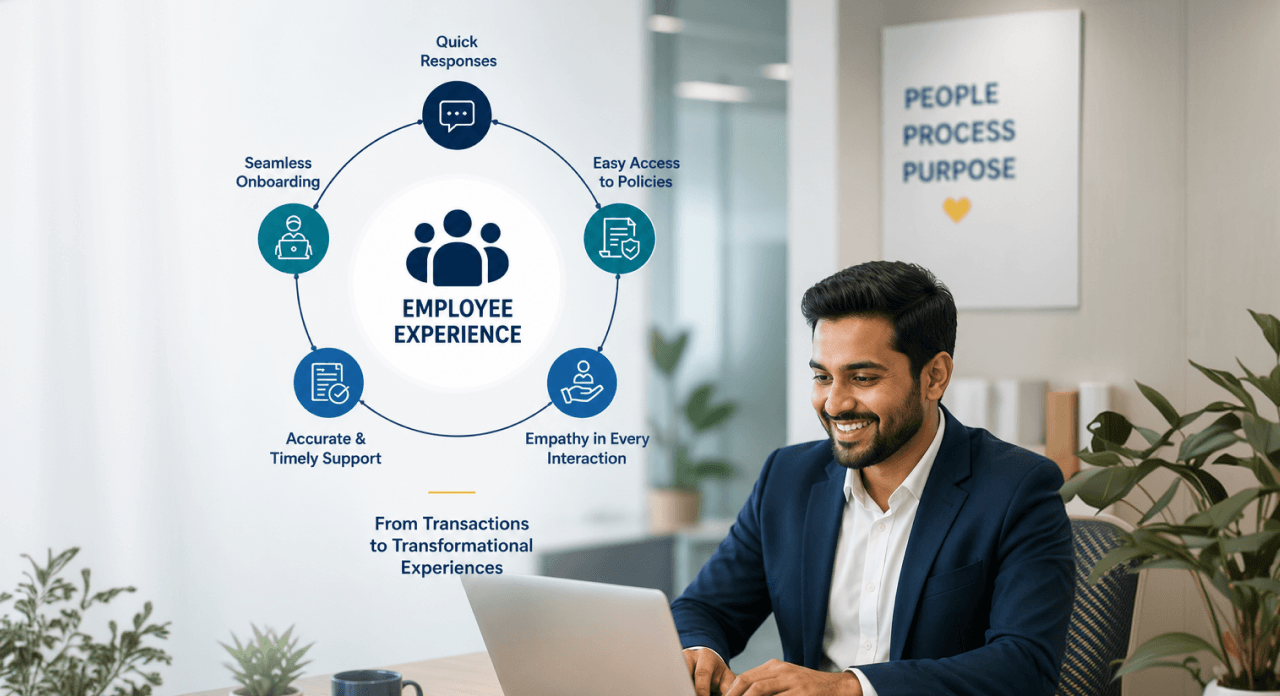
Let's be honest. Employees don't care which HR team handled their request. They care whether their problem got solved.
When an offer letter is delayed, payroll has an error, a manager can't find the right policy, or onboarding feels disorganized, employees aren't thinking about HR structures. They're forming an opinion about the company. That's why HR Shared Services has quietly become one of the most influential functions in any organization.
For years, Shared Services was measured by volumes, SLAs, and turnaround times. Those metrics still matter, but they no longer tell the whole story.
The real question is much simpler: Are we making work easier for employees?
Every interaction matters. A quick response to a query. A seamless onboarding experience. A benefits issue resolved without multiple follow-ups. A promotion letter delivered on time. These may seem like operational details, but collectively they define the employee experience. In many organizations, Shared Services is the one HR function that touches every employee, regardless of role, level, or location. That gives it a unique opportunity and responsibility. It is often the first place employees turn to when they need support and the function they interact with most consistently throughout their employment journey.
The best Shared Services teams have moved beyond simply closing tickets. They are identifying recurring issues, simplifying complex processes, improving knowledge access, and eliminating friction before it impacts employees.
Instead of asking, "How many queries did we resolve?" they're asking:
- Why are these queries being raised in the first place?
- What can we automate?
- What can we simplify?
- How can we help employees find answers without raising a ticket at all?
This shift is becoming even more important as organizations scale across geographies, adopt hybrid work models, and manage increasingly diverse workforces.
Technology is accelerating the transformation. AI-powered assistants, automation, and self-service platforms are helping employees get answers faster and complete routine transactions independently. But technology alone is not the differentiator.
The organizations that stand out are the ones that combine efficiency with empathy because employees may forget a policy update, but they won't forget how supported they felt during a critical moment, whether it was joining the company, taking parental leave, resolving a payroll concern, or navigating a career transition.
As HR leaders, we often talk about culture, engagement, and employee experience. What we sometimes overlook is that these are shaped by hundreds of everyday interactions, many of which are owned by Shared Services. That's why I believe the future of HR Shared Services is not about managing transactions more efficiently. It's about designing experiences more intentionally.
The best Shared Services teams of the future won't be known for how many tickets they closed. they'll be known for how few employees needed to raise one in the first place. And that's when Shared Services stops being an operational function and becomes a strategic driver of employee experience.
Want to improve your employee experience? Let’s talk about how HR Shared Services can make a difference. Contact us now to explore how we can help.